 RockCloud-基石云安全-官方博客

CDN Malicious Traffic Theft and DDoS Attacks Leading to Sky-High Bills: Pay-As-You-Go Traps and High-Defense CDN Selection Guide
In 2026, terabit-level and second-long pulse DDoS attacks and high-frequency CC theft are becoming the norm. Enterprises using ordinary pay-as-you-go CDNs face the dilemma of either bearing sky-high arrears bills or triggering bandwidth caps and active disconnection. This article analyzes the bill runaway mechanism of pay-as-you-go CDNs under attack and explains how to achieve business continuity and cost control through a fixed-peak, unlimited-traffic, integrated defense high-defense CDN architecture.

Can High-Defense CDN Stop CC Attacks? How It Blocks, When It Fails, and Post-Setup Checks
High-defense CDN can stop CC attacks, but two conditions must be met: edge nodes must have Layer 7 scrubbing capabilities, and the origin must only be accessible via the CDN. This article explains the four methods high-defense CDN uses to block CC attacks, lists four common failure scenarios—origin IP exposure, dynamic interface penetration, challenge misfires, and non-HTTP traffic—and provides a post-setup self-check sequence and key questions to ask when choosing a provider.
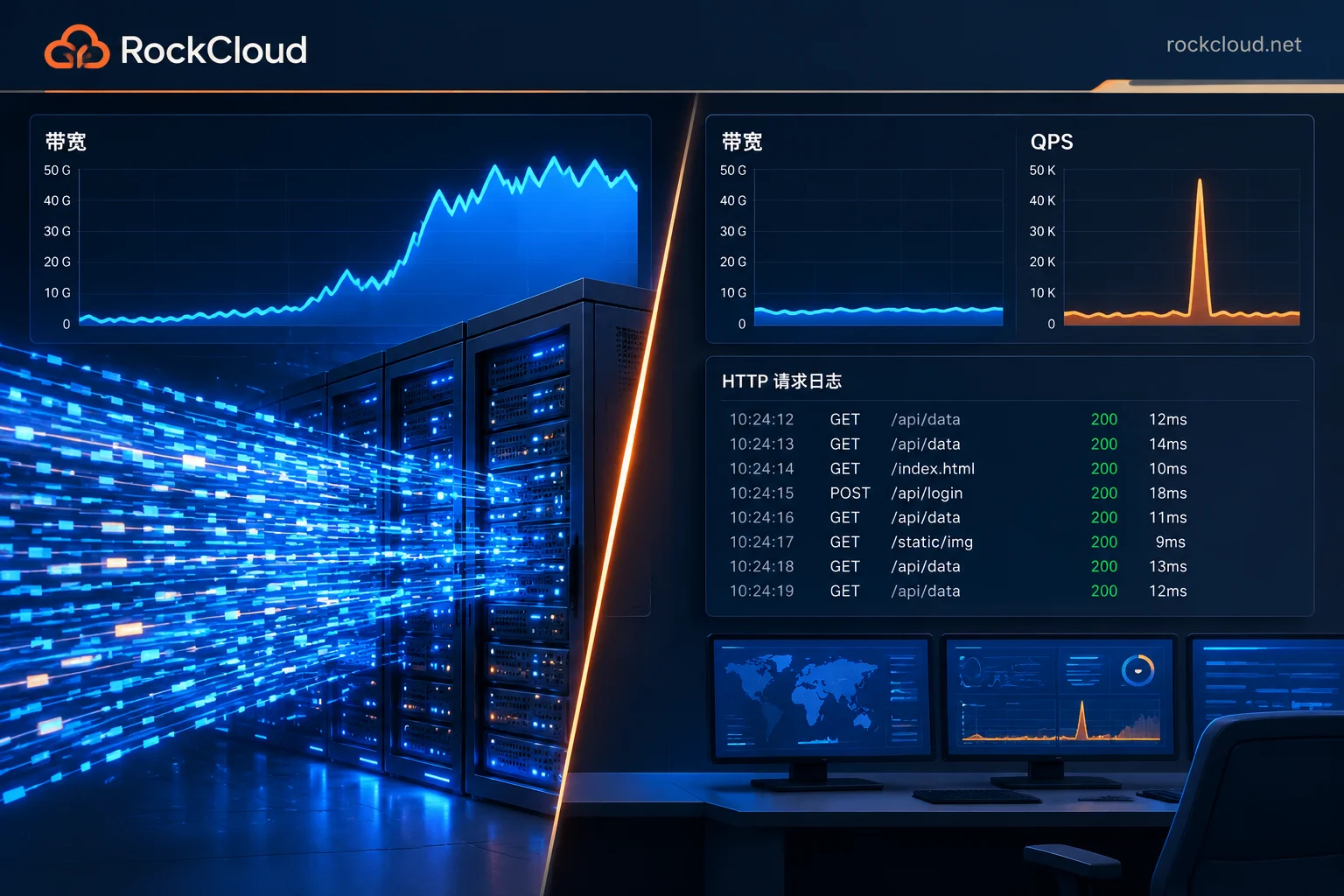
How to Tell If Your Website Is Under DDoS or CC Attack: Four-Step Diagnosis and Response
When a website suddenly goes down, three things can roughly distinguish the cause: whether bandwidth and packet volume spike, whether you can still log in to the server, and whether access logs show a flood of requests.
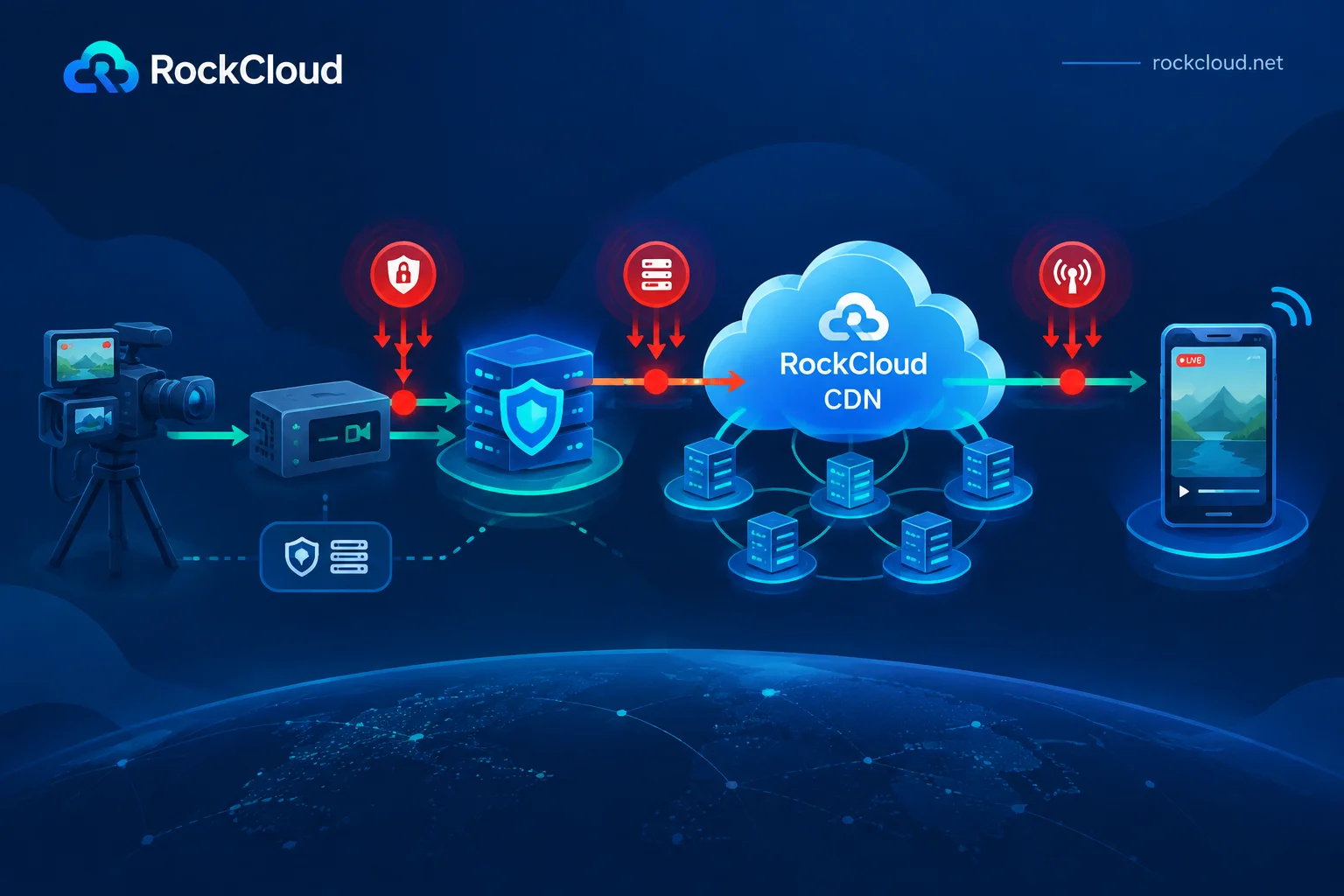
How to Handle Live Streaming Push Stream Lag from CC Attacks: Locate the Damaged Layer First, Then Stop the Bleeding in Order
When live streaming lags or frequently disconnects, spend the first ten minutes determining whether the signaling/auth API is being flooded, the playback side is penetrating back to the origin and saturating it, or the push port is being exhausted by empty connections, then apply rate limiting, cache convergence, and port closure at the corresponding layer.
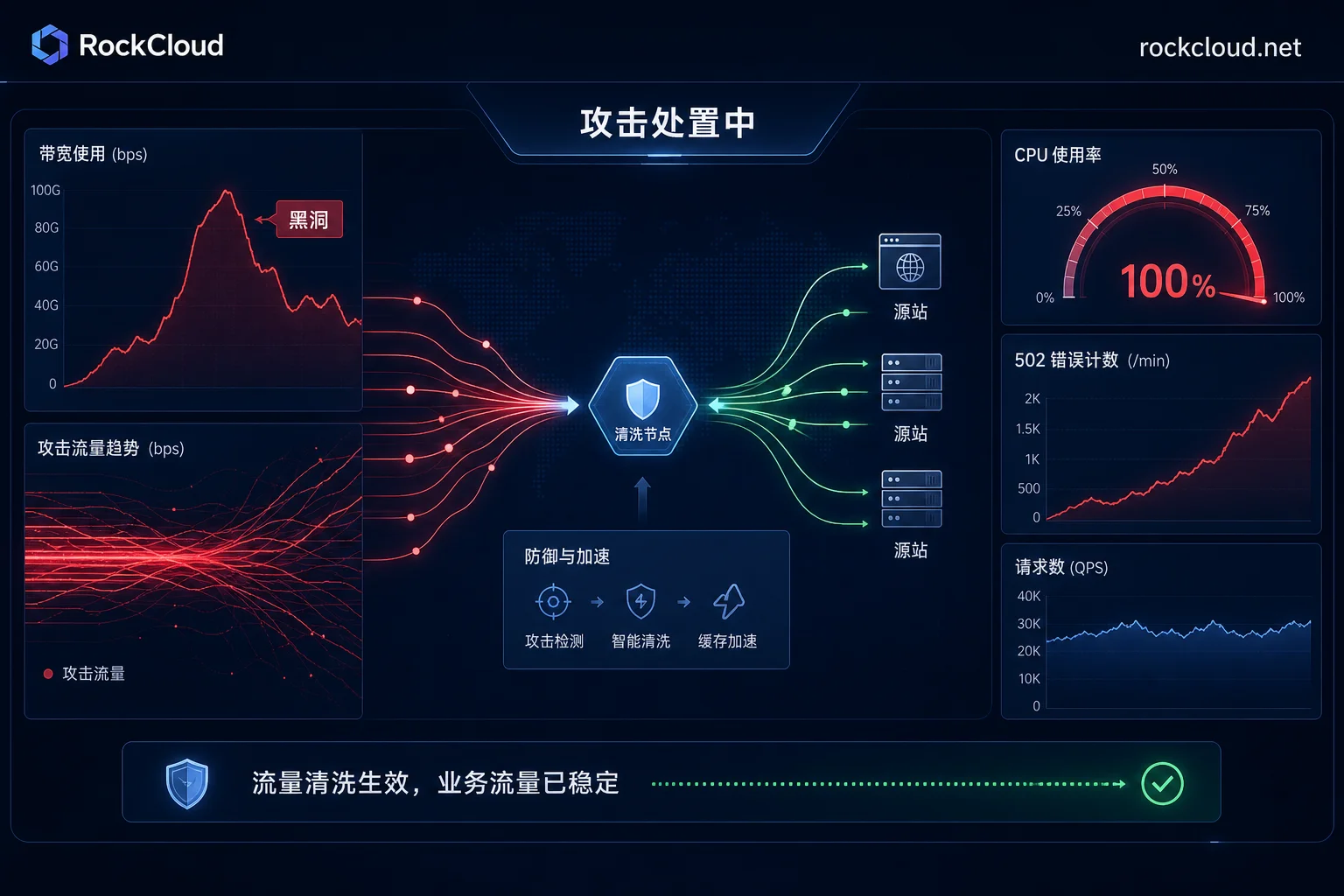
Website Under DDoS Attack? 5-Step Emergency Recovery Sequence
When a website is being hit by DDoS or CC attacks, quick recovery depends on the right sequence: first identify the attack layer, isolate the origin server (change IP if necessary), switch DNS to a mitigation node, suppress application-layer traffic at the edge, and finally clean up lingering connections.