 RockCloud-基石云安全-官方博客
In the fast-paced digital age, Content Delivery Networks (CDNs) have become a crucial technology for optimizing website performance and enhancing user experience. This article delves into how CDNs work and how they improve data transmission and network security.
Basic Concepts of CDN
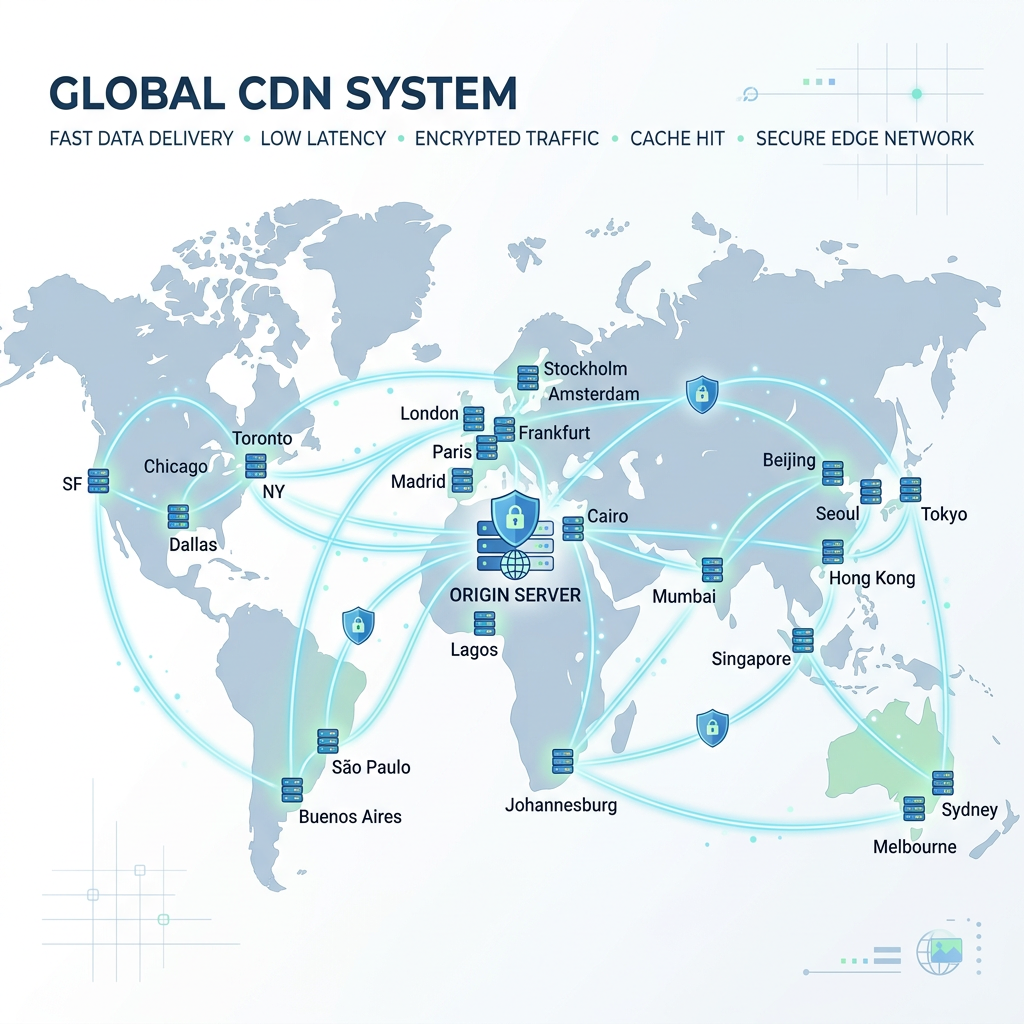
The core of CDN is to speed up content delivery and improve user experience. This technology achieves this by deploying multiple nodes globally, bringing content closer to users and thus reducing response times.
1. Content Distribution and Replication
- Global Server Network: A CDN consists of numerous data centers worldwide, each hosting network servers.
- Content Caching: These servers cache static content like HTML pages, images, videos, and stylesheets.
- Data Synchronization: Original content is synced from the origin server to all CDN nodes, ensuring consistency.
2. Route Optimization
- Intelligent Routing: When a user requests a specific page or resource, the CDN uses algorithms to determine the nearest node to serve the request.
- Latency Reduction: This approach significantly reduces data transmission latency, speeding up content loading.
3. Load Balancing
- Traffic Distribution: CDNs distribute user requests efficiently across multiple servers via load balancing, preventing any single server from becoming overloaded.
- High Availability: Ensures content availability even during traffic spikes or server failures.
CDN Workflow: From User Request to Content Delivery
Here is the complete process of how a CDN handles a user request:
User Initiates Request
1. User Request Action
- A user enters a URL in the browser or clicks a link, initiating a request for website resources.
2. DNS Resolution
- The request first undergoes DNS resolution to determine the IP address of the server to access.
- If the website uses a CDN, the DNS resolution points to the CDN instead of the origin server.
CDN Node Selection
3. Route User Request
- The CDN’s DNS system routes the request to the most suitable edge node based on the user’s geographic location, node health, and load.
4. Check Cache
- The edge node checks its cache for the requested content.
- Cache Hit: If the content is cached, the CDN node delivers it directly to the user.
- Cache Miss: If not, the CDN node requests the content from the origin server.
Content Retrieval and Delivery
5. Fetch Content from Origin
- For a cache miss, the CDN node fetches the content from the origin server.
- Once retrieved, it is cached on the node for future faster serving.
6. Deliver Content to User
- The CDN node sends the requested content (from cache or origin) back to the user.
- The user’s browser receives and displays the content.
Ongoing Optimization
7. Cache Optimization
- CDNs continuously update caching strategies to keep frequently requested content on edge nodes.
- This may include prefetching strategies that fetch content from the origin in anticipation of high demand.
8. Performance Monitoring
- CDN providers constantly monitor network performance and traffic patterns to optimize node distribution and caching strategies, handling traffic spikes and potential attacks.
Security Considerations
9. Security Measures
- CDNs enhance security through DDoS attack protection, SSL/TLS encryption, and more.
10. Data Encryption
- Data is typically encrypted via HTTPS during transit, ensuring user data security and privacy.
CDN Performance and Speed
1. Faster Access
- Reduced Data Transfer Time: With servers closer to users, CDNs reduce data transfer time and overall latency.
- Faster Page Load: Cached content leads to quicker loading, especially for static resources.
2. Scalability
- Handling Traffic Spikes: CDNs excel at managing sudden traffic surges, such as large file downloads and media streaming.
- No Extra Infrastructure: Businesses can scale content delivery without additional physical infrastructure investment.
CDN Security Features
1. DDoS Attack Protection
- Traffic Distribution: CDNs provide built-in DDoS defense by dispersing traffic across the network.
- Enhanced Security: This helps protect websites from massive traffic attacks.
2. Data Encryption
- Secure Transmission: CDNs enable secure connections via SSL/TLS encryption, enhancing data security during transit.
CDN Edge Computing
1. Edge Servers
- Proximity Computing: Modern CDNs include edge servers that execute application logic near users, reducing server response time.
- Dynamic Content Processing: Advanced CDNs can efficiently handle dynamic content in addition to static content.
Network Optimization
1. Reduced Bandwidth Costs
- Offloading Origin Servers: By caching content, CDNs reduce the load on core servers, lowering bandwidth costs.
- Protocol Optimization: CDNs often use optimized network protocols to improve data transfer efficiency.
Conclusion
CDNs effectively shorten the distance between users and content through their global network and edge computing capabilities, dramatically improving website loading speed and user experience. With intelligent caching, fast content delivery, and continuous performance optimization, CDNs have become an indispensable part of modern network architecture. For website operators, CDNs not only enhance access speed but also improve reliability and security.